Supplements & Protein
Creatine Monohydrate: What the Evidence Actually Says
Proven benefits, sensible dosing, safety and the marketing claims worth ignoring, from a dietitian perspective.

Creatine monohydrate is one of the most researched supplements in sports nutrition, and one of the few where the evidence is genuinely strong. It is also surrounded by myths, from claims it damages the kidneys to promises it works like a steroid. This guide separates what the research actually supports from the marketing, and explains sensible dosing, safety, and who might benefit.
What creatine is
Creatine is a compound your body makes naturally and stores mostly in muscle, where it helps regenerate energy for short, intense efforts. You also get small amounts from meat and fish. Supplementing simply tops up these stores beyond what most diets provide.
Creatine monohydrate is the original and best-studied form. Newer forms are marketed as superior, but as we will see, the evidence does not back the extra cost. It is not a protein and does not replace one, so it works alongside a solid diet rather than instead of it. If you are still building the basics, our guide to protein is a good companion read.
What the evidence actually shows
Creatine's benefits for high-intensity exercise are well established across many trials and reviews. The effects are real but modest, and they depend on training.
- Strength and power: combined with resistance training, creatine reliably improves gains in strength and short-burst power.
- Muscle mass: it supports greater increases in lean mass over time, partly through better training performance and partly through water drawn into muscle.
- Repeated sprints: it helps with repeated bouts of high-intensity effort, such as intervals and team sports.
- Emerging areas: research is exploring possible cognitive and recovery benefits, but these are less settled and should be treated with caution.
The Academy of Nutrition and Dietetics and the Harvard Nutrition Source both note that creatine is among the few supplements with credible performance evidence, while stressing it is an add-on to training and diet, not a substitute.

How to dose it
Dosing is simple and does not need expensive protocols. Two common approaches both reach the same endpoint.
- Daily maintenance: around 3 to 5 grams a day, every day. Stores fill over roughly three to four weeks.
- Loading phase (optional): about 20 grams a day split into four doses for five to seven days, then 3 to 5 grams daily. This fills stores faster but is not required.
- Timing is flexible: consistency matters more than whether you take it before or after training.
- Take it daily on rest days too: the goal is keeping muscle stores topped up, not a pre-workout hit.
Tip: A plain, unflavoured creatine monohydrate powder is the most cost-effective option, and it mixes into water, juice, or a protein shake. There is no need to pay a premium for fancy blends.
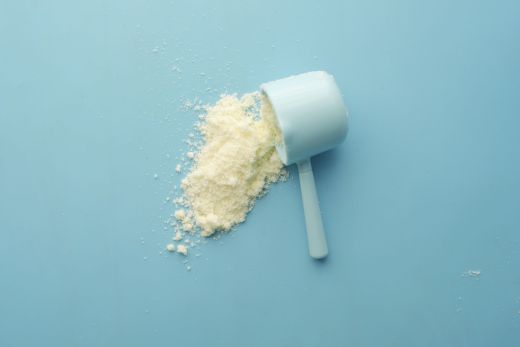
A basic tub of creatine monohydrate powder lasts a long time at 3 to 5 grams a day. Many people simply stir it into their usual protein powder .
Some links are affiliate links and we may earn a small commission at no extra cost to you. We only suggest product types we would genuinely consider.
Is monohydrate better than the newer forms
Supplement companies sell many alternative forms at higher prices. The research consistently favours plain monohydrate.
| Form | Marketing claim | What evidence suggests | Price tier |
|---|---|---|---|
| Monohydrate | The standard | Best studied and effective | Budget |
| Micronised monohydrate | Mixes more easily | Same effects, finer powder | Budget to mid |
| Hydrochloride (HCl) | Better absorbed, less bloating | No proven advantage over monohydrate | Mid to premium |
| Ethyl ester | Superior uptake | Evidence does not support the claim | Premium |
| Buffered ("Kre-Alkalyn") | More stable, needs less | No clear benefit over monohydrate | Premium |
The practical takeaway is straightforward: plain or micronised monohydrate does the job for the lowest price.
Safety and side effects
Creatine has a strong safety record in healthy adults across long-term studies. The most persistent worry, kidney damage, is not supported by evidence in people with healthy kidneys.
- Kidneys: creatine can slightly raise creatinine, a lab marker, without harming healthy kidneys. Tell your doctor you take it before blood tests.
- Water weight: a small early rise on the scales is fluid drawn into muscle, not fat.
- Stomach upset: uncommon, and usually eased by taking smaller doses with food and water.
- Pre-existing conditions: anyone with kidney disease, or who is pregnant or breastfeeding, should check with a doctor first.
Because supplements are loosely regulated, look for third-party testing such as Informed Sport or NSF Certified for Sport, especially if you compete. The same buying logic applies as in our guide to the best protein powder.

Who is likely to benefit
Creatine is most useful for people doing regular resistance or high-intensity training who want to support strength and muscle. It is not a fat burner and will not transform an untrained person overnight.
- Strength and physique training: the clearest use case.
- Team and sprint sports: where repeated high-intensity efforts matter.
- Older adults with resistance training: may benefit for muscle maintenance, ideally with professional guidance.
- Vegetarians and vegans: often start with lower muscle stores, so may notice more.
Marketing claims to ignore
Being able to spot inflated promises keeps your money where it belongs.
- "Works like a steroid": false. The effects are real but small and depend entirely on training.
- "Premium form absorbs better": not supported; monohydrate is the benchmark.
- "Burns fat": creatine is not a fat-loss aid. For that, focus on the principles in our calorie deficit guide.
You can cross-check supplement claims against the NHS, which takes a measured, evidence-first line on sports supplements.
Note: This article is general information, not medical or personalised dietary advice. For guidance tailored to you, speak with a registered dietitian or your doctor.
Have a question or a topic to suggest?
We read every message. Tell us what you would like to see next on the blog.
Get in touchYou may also like
Best Protein Powder: What the Evidence Actually Says
There is no single best protein powder for everyone. Compare whey, casein, and plant types, learn what the evidence supports, how much you need, and which marketing claims to ignore.

Protein: The Complete Evidence-Based Guide
How much protein do you actually need, and where should it come from? This evidence-based guide covers protein sources, timing, weight management and cutting through powder marketing.

Whey Protein Powder: What the Evidence Actually Says
Whey protein powder is convenient, effective, and heavily hyped. Learn its three forms, what the evidence supports, how much you need, and how to choose a good one without overpaying.