Meal Plans & Menus
Keto Diet Plan: Dietitian-Designed Plan With Shopping List
A structured keto plan with macros, a sample day, a shopping list, and honest guidance on the transition, offered as an example to adapt.
A keto diet plan is a structured way to eat very low carbohydrate, moderate protein, and high fat so your body shifts to burning fat for fuel. This dietitian-designed plan gives you a clear framework, a sample day, and a shopping list, all offered as an example to adapt rather than a fixed prescription. The goal is to help you start keto in a balanced, sustainable way and understand the trade-offs before you commit.
Keto works for some people and not others, and it is more demanding than most diets to follow well. A proper plan reduces the guesswork, protects your nutrition, and makes the first weeks far smoother.
What a keto diet plan involves
The defining feature of any keto plan is a low daily carbohydrate ceiling, usually in the range of 20 to 50 grams of net carbs, which prompts the body to produce ketones for energy. The remaining energy comes largely from fat, with protein kept moderate. If you are new to the underlying idea, our keto guide explains how and why the metabolic shift happens.
A well-built plan is more than a carb limit. It balances food quality, fibre, electrolytes, and variety so you are not simply eating processed meat and cheese. Our overview of keto eating plans compares different structures you can choose from.
- Carb ceiling: typically 20 to 50 g net carbs daily, personalised to you.
- Fat as fuel: most energy from fats, prioritising unsaturated sources.
- Moderate protein: enough to preserve muscle without excess.
It is useful to know why keto feels so different from ordinary dieting. On a typical diet the body runs mainly on glucose from carbohydrate. When you cut carbs low enough for long enough, glycogen stores deplete and the liver starts converting fat into ketones, which most tissues, including the brain, can use for fuel. That metabolic switch is the whole point of the plan, and it is also why the first week can feel strange while your body adapts to a new primary fuel.
Because the plan removes entire food groups, a good keto diet plan pays deliberate attention to the nutrients those foods normally provide, such as fibre, potassium, and magnesium. Skipping this planning is how people end up constipated, tired, and blaming keto itself when the real problem is a poorly built version of it. A little forethought at the start prevents most of the common complaints.
Setting your macros
Macros are the backbone of a keto plan. A common starting point is around 70 to 75 percent of calories from fat, 15 to 20 percent from protein, and 5 to 10 percent from carbohydrate. These figures are guidelines that should flex with your body size, activity level, and goals rather than being treated as exact targets.
Protein deserves particular attention. Too little risks muscle loss, while very high intakes can blunt ketosis in some people. Aiming for a moderate, consistent protein intake spread across the day works well for most. Our high-protein foods list helps you hit that target with keto-friendly choices.
- Fat first: build meals around a quality fat source and low-carb vegetables.
- Protein steady: a palm-sized portion at most meals is a simple guide.
- Carbs from vegetables: spend your carb budget on fibre-rich greens.
Calories still count on keto, even though the diet is often described as if they do not. Many people lose weight on keto because protein and fat are filling and cutting sugary, starchy foods naturally lowers intake. If weight loss stalls, the usual culprit is a creeping calorie surplus from generous portions of cheese, nuts, and oil rather than a metabolic mystery. Keeping a loose eye on portions solves most plateaus without needing to slash carbs even further.
A sample day plan
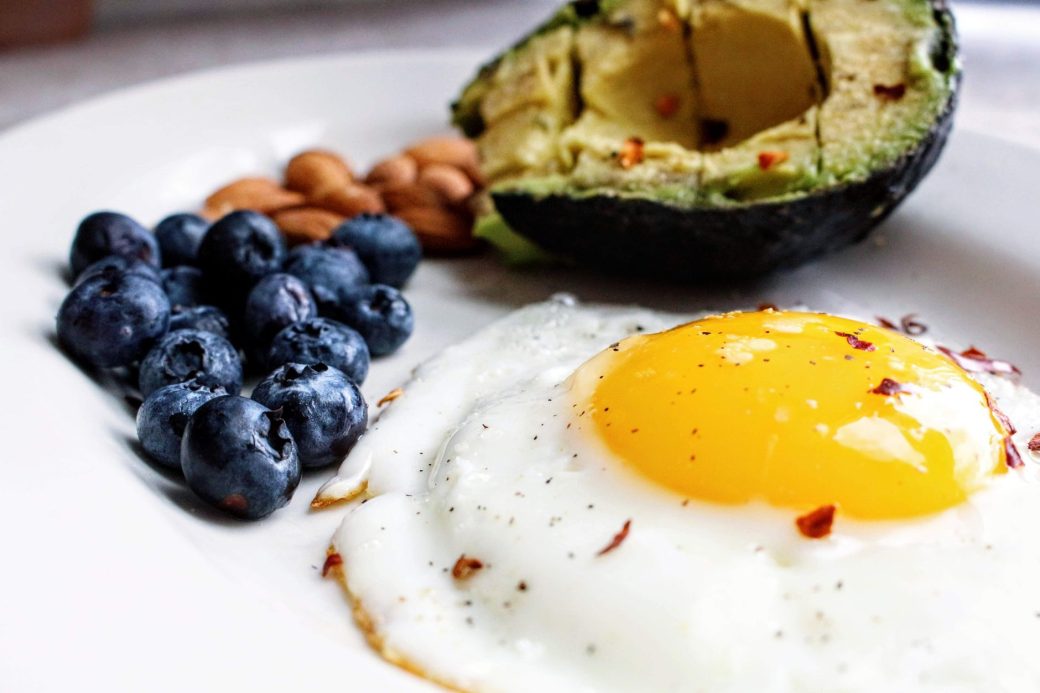
This example day shows how the macros translate into meals. Portions should be scaled to your energy needs, and every item can be swapped for a similar low-carb option you prefer.
| Meal | Example | Main role |
|---|---|---|
| Breakfast | Three eggs, spinach, half an avocado | Fat and protein |
| Lunch | Chicken thighs on mixed leaves with olive oil | Protein and fat |
| Snack | Small handful of almonds and cheese | Fat and satiety |
| Dinner | Baked salmon, broccoli, garlic butter | Omega-3 fat and vegetables |
| Optional | Greek yoghurt with a few berries | Protein and fibre |
Tip: Track your first week or two so you learn where carbs hide. Once you know your usual meals fit, you can often stop logging and eat by pattern.
The shopping list
Stocking the right staples is what makes a keto plan stick. This list supports the sample day and gives you room to build several meals. Adjust to your household size and taste.
- Proteins: eggs, chicken, salmon, beef, pork, tofu, tinned fish.
- Fats: olive oil, avocado, butter, nuts, seeds, olives.
- Vegetables: spinach, broccoli, cauliflower, courgette, salad leaves.
- Dairy: cheese, full-fat Greek yoghurt, cream.
- Store cupboard: herbs, spices, vinegar, mustard, low-carb sauces.
Cooking with fat is central to keto, and a stable cooking oil makes it easier. Many people keep a bottle of extra virgin olive oil as their default fat because it suits dressings and gentle cooking alike. Choose based on the type and quality that fit your budget.
Some links are affiliate links and we may earn a small commission at no extra cost to you. We only suggest product types we would genuinely consider.
Handling the transition
The first week is often the hardest. As the body adapts, some people experience fatigue, headaches, or irritability, informally called the "keto flu". This is usually linked to fluid and electrolyte shifts and tends to pass within days. Staying hydrated and keeping sodium, potassium, and magnesium adequate helps considerably.
The NHS cautions that very low-carbohydrate diets can cause side effects and are not suitable for everyone, so ease in gradually and pay attention to how you feel.
- Hydrate well: water needs often rise in the first weeks.
- Mind electrolytes: sodium, potassium, and magnesium ease early symptoms.
- Go gradual: a slightly slower carb reduction can soften the transition.
Fibre deserves special mention during the transition, because constipation is one of the most common early complaints. Leaning on low-carb, high-fibre vegetables such as broccoli, leafy greens, and courgette, along with seeds like chia and flax, keeps digestion moving without spending your carb budget. Adequate fluid supports this too, since fibre works best when you are well hydrated.
Sleep and stress also influence how smoothly the first weeks go. Poor sleep raises appetite and makes cravings for quick carbohydrate harder to resist, which can undermine an otherwise solid plan. Treating rest and stress management as part of the plan, rather than afterthoughts, makes the dietary side considerably easier to sustain.

Is a keto plan right for you?
Keto can support short-term weight loss and appeals to people who prefer savoury, satiating meals. It is also restrictive, socially awkward at times, and unsuitable for several groups. People who are pregnant or breastfeeding, have certain kidney, liver, or pancreatic conditions, a history of disordered eating, or take medication for diabetes should seek individual advice first. For a gentler alternative, compare it against our keto menu plan or a less restrictive weight approach.
The CDC emphasises that the most effective eating pattern is one you can maintain long term, which is the honest question to ask before starting any restrictive plan.
- May suit: people who prefer savoury meals and want structure.
- May not suit: those needing high-carb fuel or lots of dietary flexibility.
- Always check first: medical conditions and medications need professional review.
If you do try keto and find it does not suit you, that is useful information rather than a failure. Some people feel sharp and satisfied on very low carbohydrate, while others feel flat, especially if they train hard or need carbohydrate to fuel their sport. Neither response is wrong. The best eating pattern is the one that keeps you healthy, well fuelled, and able to stick with it, and for many people that turns out to be a moderate approach rather than a strict one. Use this plan as an experiment to learn how your own body responds, and adapt it, or move on from it, based on how you actually feel and function.
Note: This article is general information, not medical or personalised dietary advice. For guidance tailored to you, speak with a registered dietitian or your doctor.
Have a question or a topic to suggest?
We read every message. Tell us what you would like to see next on the blog.
Get in touchYou may also like

Keto Menu Plan: Dietitian-Designed Plan With Shopping List
A dietitian-designed keto menu plan with a seven-day sample menu, macros, portions, and a printable shopping list you can adapt to your own tastes and needs.
Keto Eating Plans: The Complete Evidence-Based Guide
A keto eating plan removes the daily guesswork of low carbohydrate eating. Here is how a sound plan works, what it should include, and how to build one you can actually stick to.
Keto: The Complete Evidence-Based Guide
Keto is more than a buzzword. A dietitian explains what ketosis really means, what science supports, the myths to ignore, and whether keto is worth your time.