Meal Plans & Menus
Keto Menu Plan: Dietitian-Designed Plan With Shopping List
A seven-day sample keto menu with macros, portions, and a printable shopping list, offered as an example to adapt to you.

A keto menu plan maps out what you eat across a week while keeping carbohydrates very low, protein moderate, and fat high enough to fuel you. This dietitian-designed sample menu and shopping list is built as a practical example to adapt to your tastes, budget, and needs, not a rigid prescription. Use it to see what a balanced ketogenic week can look like, then adjust the portions and swaps to suit you.
The hardest part of keto is not the science, it is the daily "what do I actually eat?" question. A menu plan answers that in advance, which is exactly why planning tends to improve adherence. Everything below is a template to personalise.
How a keto menu works
A ketogenic menu keeps carbohydrate intake low enough that the body shifts toward using fat and ketones for fuel, a state explained in our guide to ketosis. In practice this usually means keeping net carbs to roughly 20 to 50 grams per day, with the exact target depending on the person. The rest of your energy comes mostly from fat, with a moderate, steady protein intake.
Because whole food groups are limited, planning matters more on keto than on many other patterns. A menu helps you hit your carb ceiling without accidentally under-eating vegetables or overloading on processed meats. For the underlying principles, our keto diet guide covers the evidence and cautions in depth.
- Very low carb: typically 20 to 50 g net carbs per day, tailored to you.
- Moderate protein: enough to protect muscle without stalling ketosis.
- High healthy fat: the main energy source, favouring unsaturated fats where possible.
One point people miss is that keto is not a licence to eat unlimited bacon and butter. The quality of your fats still matters for long-term heart health, so a well-designed menu leans on olive oil, oily fish, nuts, seeds, and avocado rather than relying only on processed meats and hard cheese. Building the plan around whole foods also brings in the fibre and micronutrients that a careless keto diet can lack.
The word "net" carbs matters too. Net carbs are total carbohydrate minus fibre, because fibre is not digested the same way. This is why non-starchy vegetables, which are high in fibre relative to their carbohydrate, can feature generously in a keto menu while bread, rice, and sugar cannot. Getting comfortable reading labels for net carbs is one of the most useful skills for following any keto plan.
A sample seven-day menu
This is one example week. Portion sizes should be scaled to your energy needs, and any meal can be repeated or swapped. The aim is variety within the carb budget rather than perfection.
| Day | Breakfast | Lunch | Dinner |
|---|---|---|---|
| Mon | Eggs with spinach and avocado | Chicken salad with olive oil | Salmon, asparagus, butter |
| Tue | Greek yoghurt with seeds | Tuna and mixed leaves | Beef stir-fry with broccoli |
| Wed | Omelette with cheese and mushrooms | Leftover beef stir-fry | Roast chicken thighs, courgette |
| Thu | Chia pudding with coconut | Egg and avocado salad | Pork chop, cauliflower mash |
| Fri | Scrambled eggs, smoked salmon | Halloumi and salad bowl | Prawn and vegetable curry (no rice) |
| Sat | Keto pancakes with berries | Chicken and pesto lettuce wraps | Steak, green beans, garlic butter |
| Sun | Full breakfast (no toast or beans) | Baked salmon and salad | Slow-cooked lamb with greens |
Tip: Batch-cook two dinners at the weekend and use the leftovers for the next day's lunch. It cuts decision fatigue and keeps stray carbs out of your week.
Macros and portions
A common starting split for a ketogenic plan is roughly 70 to 75 percent of energy from fat, 15 to 20 percent from protein, and 5 to 10 percent from carbohydrate, though these are guidelines rather than rules. Individual needs vary with body size, activity, and goals, which is why personalising the plan matters more than chasing exact percentages.
To keep portions realistic, it helps to know which foods fit and which do not. Our keto food plan with portions and our carb foods list make it easier to stay under your carb ceiling while still eating enough.
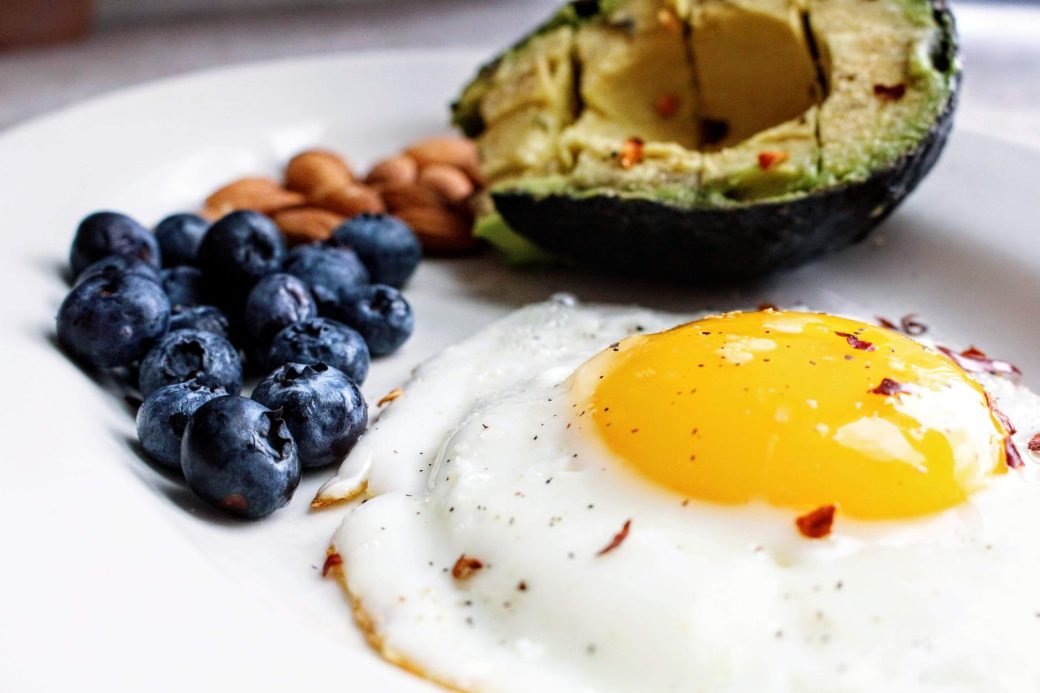
- Fat sources: olive oil, avocado, oily fish, nuts, butter, and full-fat dairy.
- Protein sources: eggs, poultry, fish, meat, and tofu in moderate portions.
- Low-carb vegetables: leafy greens, broccoli, courgette, cauliflower, and peppers.
Portion sizes on keto are easy to underestimate, particularly with calorie-dense foods. Nuts, cheese, nut butters, and oils are all keto-friendly, but they are also very energy-dense, so a "small handful" can quietly become a large one. Weighing these foods for the first week or two builds a reliable sense of what a portion actually looks like, after which most people can eyeball it. This awareness matters because keto controls carbohydrate well but does not switch off the effect of overall calories.
The printable shopping list
This starter list covers the sample week. Adjust quantities to your household and swap proteins freely. Keeping the kitchen stocked with keto-friendly staples is the single biggest predictor of sticking to the plan.
- Proteins: eggs, chicken, salmon, tuna, beef, pork, prawns, halloumi.
- Fats: olive oil, butter, avocados, coconut, mixed nuts and seeds.
- Vegetables: spinach, broccoli, cauliflower, courgette, asparagus, salad leaves, peppers.
- Dairy: full-fat Greek yoghurt, cheese, double cream.
- Extras: chia seeds, berries in small amounts, pesto, herbs and spices.
Electrolytes are worth planning for early, because the first days of keto often flush water and minerals. A simple sugar-free electrolyte supplement can help with the fatigue and headaches some people feel in the transition, though it is a comfort measure rather than a requirement.
Some links are affiliate links and we may earn a small commission at no extra cost to you. We only suggest product types we would genuinely consider.
Staying on track
Most keto slip-ups come from hidden carbs and social eating rather than obvious lapses. Sauces, dressings, "low-fat" products, and starchy sides add up quickly. Reading labels and planning restaurant choices in advance keeps the week intact. If you want a broader framework beyond the menu, our keto diet plan walks through structure and phases.
The Harvard Nutrition Source notes that keto can be effective for short-term weight loss for some people but is restrictive and not right for everyone, so listen to your body and energy levels as you go.
- Watch hidden carbs: sauces, dressings, and processed foods add up fast.
- Prioritise vegetables: fibre and micronutrients matter even on low carb.
- Plan eating out: choose protein and non-starchy sides, hold the bread.
Meal prep is the quiet hero of a successful keto week. Because convenient food is so often carbohydrate-heavy, having ready-to-eat keto options in the fridge protects you at exactly the moments willpower is lowest: a rushed lunch, a late finish, or a hungry gap before dinner. Hard-boiled eggs, pre-chopped vegetables, cooked chicken, and portioned nuts turn a difficult choice into an easy one.
It also helps to keep expectations realistic in the first fortnight. Early weight change on keto is largely water as glycogen stores empty, so the scale can move quickly at first and then slow. This is normal and not a sign the plan has stopped working. Judging progress over several weeks, and by how your clothes fit and your energy feels, gives a truer picture than any single weigh-in.

Who should be cautious
Keto is not suitable for everyone. People who are pregnant or breastfeeding, those with certain kidney, liver, or pancreatic conditions, people with a history of disordered eating, and those on some medications, particularly for diabetes, should get individual advice before starting. The British Dietetic Association recommends professional guidance for significantly restrictive diets.
- Check medications: diabetes and blood-pressure drugs may need adjusting.
- Consider your history: restrictive plans can be risky with disordered eating.
- Get individual advice: a dietitian can adapt keto safely to your situation.
It is also worth thinking about the long game before you start. Keto can be effective for some people over weeks and months, but few people eat this way for the rest of their lives, so it helps to have a plan for what comes after. Reintroducing carbohydrate gradually, prioritising whole grains, legumes, fruit, and vegetables, avoids the sudden swing back to old habits that often erases early progress. A menu plan is a starting structure, not a life sentence, and the healthiest outcome is usually a sustainable pattern you can keep rather than a diet you endure and abandon.
Note: This article is general information, not medical or personalised dietary advice. For guidance tailored to you, speak with a registered dietitian or your doctor.
Sources and further reading:
- Harvard Nutrition Source for a balanced view of ketogenic diets.
- British Dietetic Association for guidance on restrictive diets.
Have a question or a topic to suggest?
We read every message. Tell us what you would like to see next on the blog.
Get in touchYou may also like
Keto Diet Plan: Dietitian-Designed Plan With Shopping List
A dietitian-designed keto diet plan with a clear macro framework, a sample day, a shopping list, and honest guidance on the transition and who should avoid it.
Keto Food Plan: Dietitian-Approved List With Portions
A categorised, dietitian-approved list of keto foods with realistic portions, plus a sample day and the swaps that make the plan easier to sustain.
Keto Diet: The Complete Evidence-Based Guide
The keto diet shifts your body onto fat for fuel through very low carbohydrate eating. Here is what the evidence actually supports, who benefits, and the real trade-offs to weigh before you try it.