Popular Diets · Popular Diets
Mediterranean Diet: The Complete Evidence-Based Guide
What the Mediterranean diet really is, what the research supports, and how to ease into a flexible, whole-food pattern without overhauling your kitchen.
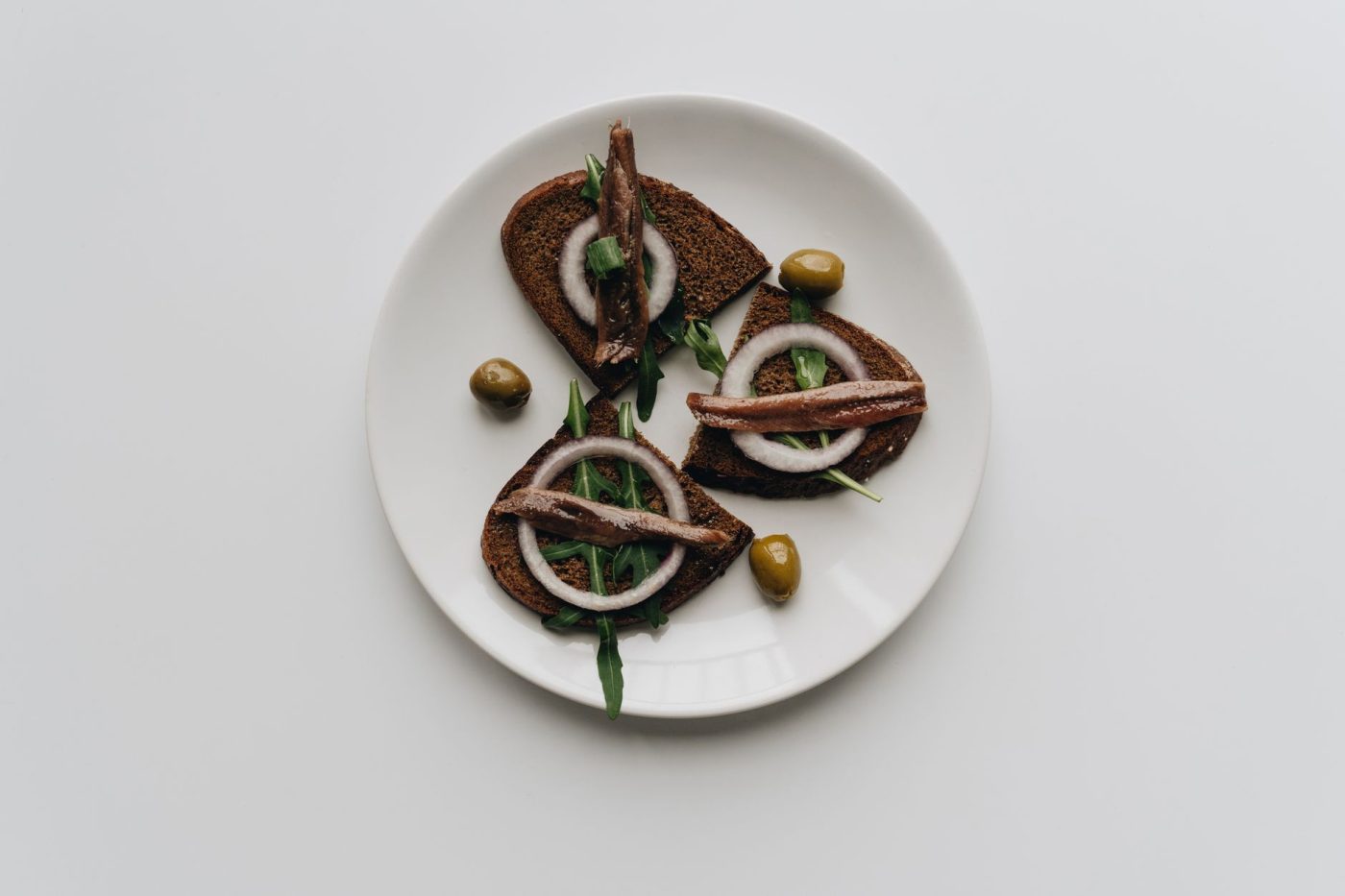
The Mediterranean diet is less a strict plan and more a pattern of eating built around vegetables, legumes, wholegrains, olive oil and fish. It is one of the most studied eating patterns in the world, and research consistently links it with better heart and metabolic health. This guide explains what it is, what the evidence actually supports, and how to start without overhauling your whole kitchen.
What is the Mediterranean diet
The Mediterranean diet describes the traditional eating habits of countries bordering the Mediterranean Sea, including parts of Greece, Italy and Spain. Rather than counting calories or cutting whole food groups, it emphasises minimally processed plant foods, healthy fats and moderate portions of fish and dairy. Red meat and sweets appear occasionally rather than daily.
Because it is a pattern rather than a rulebook, there is no single official version. Most descriptions share the same backbone: plenty of plants, olive oil as the main added fat, fish and seafood a few times a week, and a relaxed, shared approach to meals. It pairs naturally with other whole-food patterns, and many of the principles overlap with the DASH diet.
What the research shows
Among all popular eating patterns, the Mediterranean diet has some of the strongest and most consistent research behind it. Studies repeatedly associate it with a lower risk of heart disease, and it is regularly recommended by public health bodies as a heart-friendly way to eat. Researchers generally attribute the benefits to the overall combination of foods rather than any single ingredient.
Beyond heart health, researchers have explored links with healthy ageing, brain function and metabolic markers such as blood sugar and cholesterol. The signals are encouraging, though the strength of evidence varies from area to area. What stands out is the consistency: across different countries and study designs, people who eat this way tend to fare well over the long term. That reliability is a big part of why so many professional bodies use it as a reference pattern.
It is worth being realistic about what this evidence means. Observational studies show associations, not guarantees, and results vary between individuals. Genetics, activity, sleep and stress all play a part, so no single diet works identically for everyone. The pattern is best understood as supportive of long-term health, not a treatment for any specific condition. For a wider view of how eating patterns influence health, see our guide to nutrition.
Foods to enjoy
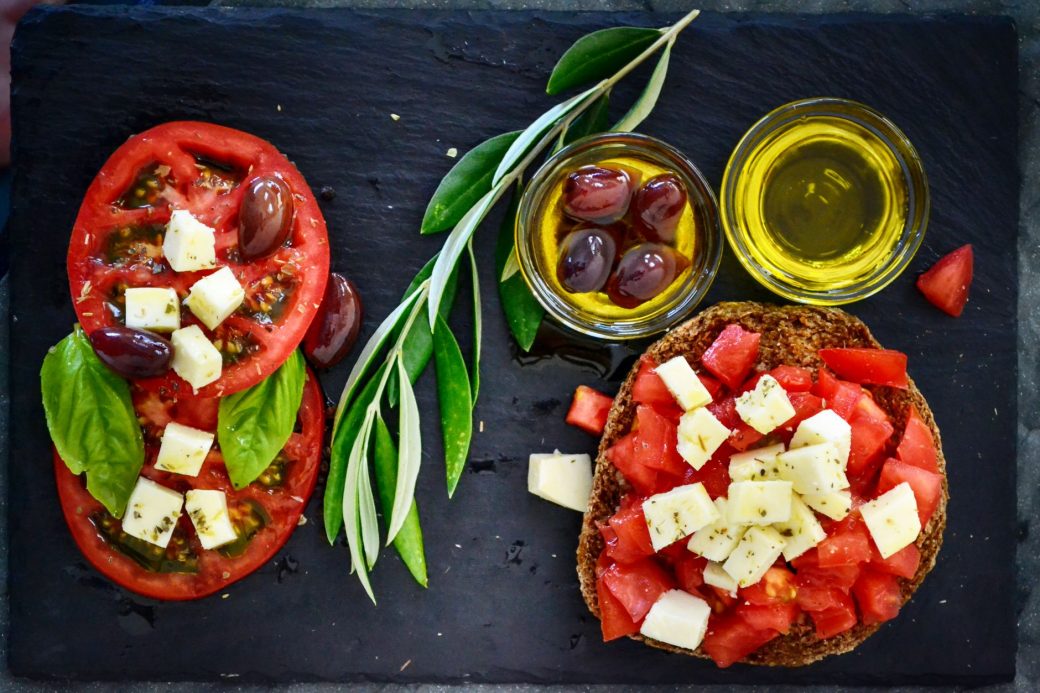
The building blocks are affordable and widely available. You do not need speciality ingredients to eat this way, and most swaps are gradual.
- Vegetables and fruit: aim to fill half your plate with produce, fresh or frozen, across a range of colours.
- Wholegrains: oats, wholegrain bread, brown rice, barley and wholewheat pasta over refined versions.
- Legumes: lentils, chickpeas and beans several times a week for protein and fibre.
- Olive oil: extra virgin olive oil as the main added fat for cooking and dressing.
- Fish and seafood: oily fish such as salmon, sardines or mackerel a couple of times a week.
- Nuts, seeds and dairy: a small handful of unsalted nuts most days, plus moderate yoghurt and cheese.
Flavour comes from herbs, spices, garlic, lemon and a little cheese rather than heavy sauces or salt, which keeps meals interesting without relying on processed extras. Where alcohol features, it is traditionally a small amount of wine with meals, but this is optional and not something to take up for health reasons. Water is the everyday drink of choice.
Because legumes and wholegrains feature so heavily, this pattern is naturally rich in fibre. If you want to build that habit further, our list of high fibre foods pairs well here.
Foods to limit
Nothing is strictly banned, which is part of why the pattern is easy to sustain. The idea is to shift the balance rather than police every meal.
- Ultra-processed foods: packaged snacks, sugary drinks and ready meals kept occasional rather than routine.
- Red and processed meat: smaller portions, less often, with fish and legumes taking their place.
- Added sugar: sweets and desserts treated as a small pleasure rather than a daily fixture.
- Refined grains: white bread and white rice swapped for wholegrain versions where you can.
A sample day of eating
This is an illustration, not a prescription. Portions depend on your appetite, activity and goals.
| Meal | Example | Rough portion |
|---|---|---|
| Breakfast | Greek yoghurt with oats, berries and walnuts | 1 bowl |
| Lunch | Chickpea and vegetable salad with olive oil | 1 large plate |
| Snack | Fruit and a small handful of almonds | 1 piece plus 20g nuts |
| Dinner | Baked salmon, roasted vegetables, brown rice | 1 plate |
| Extras | Extra virgin olive oil, herbs, water or tea | To taste |
Tip: Start with one swap a week rather than a full overhaul. Moving from white to wholegrain bread, or adding a portion of legumes to two dinners, is enough to shift the pattern in the right direction.
Pros and cons
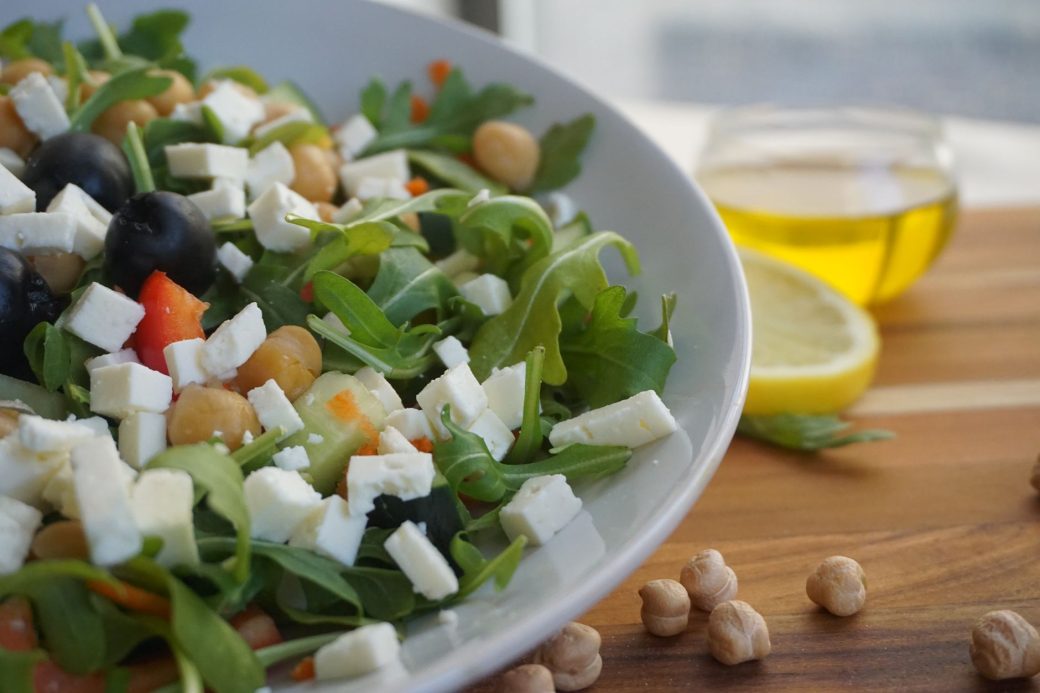
Like any way of eating, it has trade-offs worth weighing honestly.
- Flexible and sustainable: no banned foods and no calorie counting, which helps many people stick with it.
- Nutrient dense: naturally high in fibre, unsaturated fats and a wide range of vitamins and minerals.
- Cost and access: oily fish and extra virgin olive oil can be pricey, though tinned fish, frozen produce and dried legumes keep it affordable.
- Not a quick fix: it is designed as a long-term pattern, so it will not deliver dramatic short-term results.
Who it suits
The Mediterranean pattern suits people who want a flexible, whole-food approach they can follow for years rather than weeks. It adapts easily to vegetarian eating, and the plant-forward structure overlaps with our vegetarian diet guide. Because it centres plants, fibre and unsaturated fats, it is also a common starting point for people focused on heart healthy foods.
It is not automatically right for everyone. If you have a medical condition, food allergies or specific goals such as significant weight change, the general pattern may need tailoring. Protein needs in particular vary from person to person, which we cover in the protein guide.
People often ask whether the Mediterranean diet is good for weight loss. It is not designed as a weight-loss diet, but because it is filling, high in fibre and lower in ultra-processed foods, many people naturally eat a little less on it without feeling deprived. If weight change is your main goal, you can keep the same food choices while paying attention to overall portions. It also adapts well to different life stages, from busy family cooking to eating for healthy ageing, which is part of why professionals reach for it so often.
How to get started
You can ease in gradually. Begin by making olive oil your default cooking fat, adding an extra portion of vegetables to lunch and dinner, and planning two fish meals a week. From there, build in legumes, swap refined grains for wholegrains, and keep sweets as an occasional treat. For meal ideas that fit the pattern, browse our Mediterranean diet meals.
A simple first week might look like this: swap your usual cooking oil for extra virgin olive oil, add a side salad or extra vegetables to two dinners, cook one meal around lentils or beans, plan a single fish dinner, and switch one refined grain to a wholegrain version. None of these steps is dramatic on its own, but together they move your everyday eating firmly toward the pattern. Once those feel automatic, layer in the next few changes rather than trying to do everything at once.
The beauty of this approach is that it bends to your budget and culture. Tinned sardines, frozen spinach, dried lentils and seasonal produce keep costs down, and you can apply the same principles to almost any cuisine by leaning on plants, wholegrains and healthy fats. Consistency over months matters far more than perfection in any single week.
Public health bodies such as the NHS and the Harvard Nutrition Source both describe Mediterranean-style eating as a sensible, evidence-aligned default. The WHO similarly promotes plant-forward, minimally processed diets for population health.
Note: This article is general information, not medical or personalised dietary advice. For guidance tailored to you, speak with a registered dietitian or your doctor.
Sources and further reading:
- NHS for healthy eating and heart-health guidance.
- Harvard Nutrition Source for a detailed overview of the Mediterranean pattern.
- World Health Organization for population-level healthy diet recommendations.
Have a question or a topic to suggest?
We read every message. Tell us what you would like to see next on the blog.
Get in touchYou may also like

DASH Diet: The Complete Evidence-Based Guide
The DASH diet is one of the best studied patterns for blood pressure and heart health. Here is how it works, what the evidence supports, and how to start it sustainably.
Mediterranean Diet Meals: The Complete Evidence-Based Guide
The Mediterranean diet is one of the most researched ways to eat. This guide turns the evidence into real meals for breakfast, lunch and dinner, with a simple plate formula anyone can follow.

Heart Healthy Foods: Dietitian-Approved List With Portions
No single food protects your heart, but the right everyday pattern does. This dietitian-approved list groups heart healthy foods by type, with realistic portions and swaps that add up to protective eating.